
General questions about face and eye masks
General questions about face and eye masks
The fundamentals: how face masks and eye masks work, how often to use them, what to look for, and what to skip. These are the questions most often asked before a first purchase.
1. What is a face mask and how often should I use one?
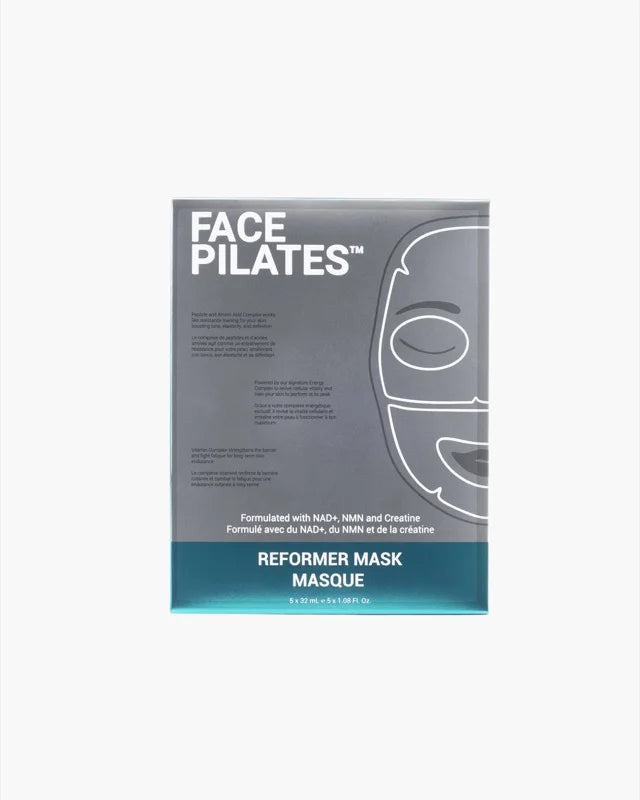
A face mask is a treatment product, typically a sheet or cream, formulated to deliver a concentrated dose of active ingredients to the skin during a short, intensive session, usually 15 to 20 minutes. Most hydrating face masks can be used two to three times per week. Exfoliating or clay masks should be used less often, generally once a week, because they impose a temporary stress on the barrier. The biocellulose Reformer Face Mask is formulated for frequent use, including immediately after professional facials, because it contains only humectants and barrier-supportive actives.
2. What is the difference between a face mask and an eye mask?
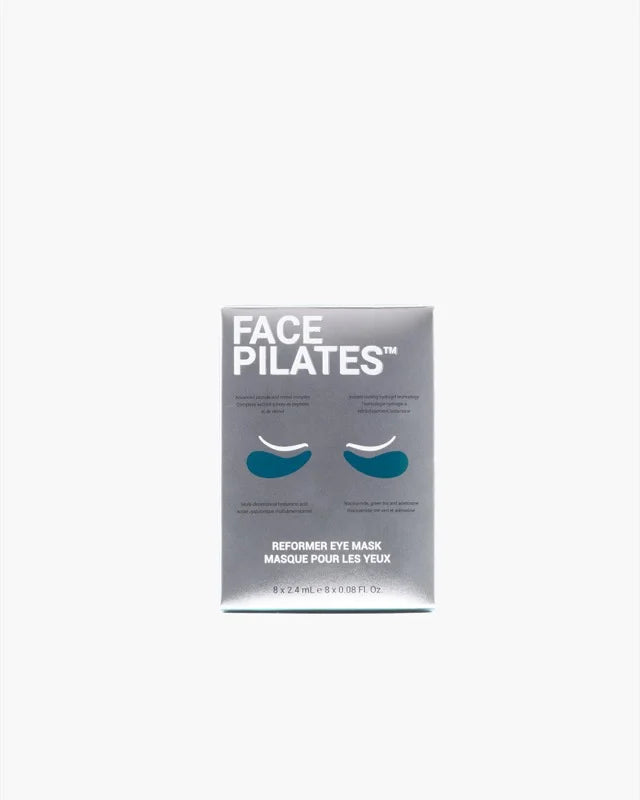
A face mask treats the entire facial surface: forehead, cheeks, nose, chin and the area around the mouth. An eye mask treats only the orbital area, the bony rim surrounding the eye where the skin is thinnest, has the fewest sebaceous glands, and shows fatigue, fine lines and water loss first. Because the two zones have different needs, the best face and eye masks often use different substrate materials. The Reformer Face Mask is biocellulose for occlusive, long-contact hydration on the face. The Reformer Eye Mask is hydrogel for cooling and contouring on the under-eye.
3. Do face masks actually work?
Yes, when the mask is matched to the skin’s needs and used consistently. A 20-minute application of a well-formulated mask can deliver a higher concentration of actives than the same serum applied without occlusion because the mask creates a closed environment that limits evaporation. In a February 2026 consumer survey of users completing a full cycle of the Reformer Face Mask, 100% reported their skin felt deeply hydrated, 97% said it looked more radiant, and 87% reported firmer skin. Choose masks formulated for a specific outcome — hydration, depuffing, brightening — rather than vague claims.
4. Are sheet masks better than cream masks?
Sheet masks and cream masks do different jobs. A sheet mask creates physical occlusion, slowing evaporation and driving actives deeper, which is why sheet masks are usually preferred for hydration and post-treatment recovery. Cream masks are formulated to be left on for longer, sometimes overnight, and are typically richer. For a 20-minute hydration session, especially after an in-clinic facial, a biocellulose sheet such as the Reformer Face Mask outperforms a cream mask because the substrate itself holds water against the skin.
5. What is the best face mask for hydration?
The best hydration masks share three characteristics: an occlusive substrate, multi-weight humectants, and a barrier-supportive base. Biocellulose substrates outperform cotton and hydrogel for whole-face hydration because the microfibre lattice clings to facial contours and holds approximately one hundred times its weight in water. The Reformer Face Mask meets all three criteria and is the mask used at AMAN Spa Toronto as the final step of the Face Pilates™ 8-step treatment. In the February 2026 survey, 100% of users reported their skin felt deeply hydrated after a full cycle.
6. What is the best under-eye mask?
The best under-eye mask is one that addresses the two things the eye area needs most: cooling (to depuff) and contour fit (so actives reach the inner corner and the orbital rim, not just the cheekbone). Hydrogel is the substrate that delivers both. The Reformer Eye Mask is a hydrogel patch designed by Thomas Tullo, RMT, and used at AMAN Spa Toronto after lymphatic drainage and microcurrent treatments. In a February 2026 consumer survey, 100% of users reported the eye area felt more hydrated and 100% said it looked refreshed and well-rested.
7. How long should I leave a face mask on?
Twenty minutes is the standard for sheet and biocellulose masks. Less than ten minutes does not give the actives meaningful time to penetrate. More than thirty minutes risks the mask drying out and pulling moisture back from the skin, the opposite of the intended effect. The Reformer Face Mask is engineered for a 20-minute application; the biocellulose substrate retains saturation throughout that window, so you do not have to time it precisely.
8. Should I use a face mask before or after my serum?
Apply face masks to clean, slightly damp skin. Serums applied before a sheet mask sit between the mask and the skin and can dilute the mask’s delivery. The standard order is: cleanse, tone if you use one, apply the mask for 20 minutes, then follow with serum, eye cream and moisturiser. The serum applied after the mask absorbs into already-hydrated skin and works more efficiently. The Reformer Face Mask and Reformer Eye Mask are designed to be the first treatment step after cleansing.
9. Can I use a face mask every day?
You can use a hydrating mask every day if your skin is dehydrated, recovering from a treatment, or under environmental stress (winter dryness, travel, illness). Avoid daily use of exfoliating or clay masks. The biocellulose Reformer Face Mask is formulated without acids, retinoids or fragrance, which means it is safe for daily use during recovery periods, though for ongoing maintenance two to three sessions per week is sufficient.
10. Are sheet masks a waste of money?
Most drugstore cotton sheet masks deliver minimal benefit because cotton dries on the skin within 10 to 15 minutes and then pulls moisture back out. The premium-substrate category — biocellulose and high-quality hydrogel — performs measurably differently because the substrates retain saturation. The Reformer Face Mask is biocellulose; the Reformer Eye Mask is hydrogel. Both substrates are the same materials used in dermatology and aesthetic medicine offices after laser, microneedling and chemical peel procedures.
11. What is the best mask after a long flight?
Air travel dehydrates the skin and pools fluid under the eyes. The best post-flight protocol is to address both at the same time: a hydrating face mask plus a depuffing eye mask. The Reformer Face Mask (biocellulose) restores the moisture lost to cabin air, while the Reformer Eye Mask (hydrogel, ideally chilled in the hotel mini-fridge for 15 minutes first) reduces post-flight puffiness. Apply both together for the most efficient recovery.
12. How do I choose the right face mask for my skin?
Start with your most acute concern — dehydration, dullness, fine lines, post-treatment redness — and match the substrate to it. For hydration and post-treatment use, biocellulose. For exfoliation, AHA or BHA cream masks. For congestion, clay. For depuffing the eye area, hydrogel. The Reformer Mask collection addresses hydration and post-treatment recovery, the two highest-volume search categories. If your concern is congestion or active acne, talk to a licensed esthetician before introducing new mask categories.
13. Do I need to wash my face after a sheet mask?
No. After removing the mask, pat any remaining serum into the skin and follow with eye cream and moisturiser. Washing the residue off removes the actives the mask just delivered. Both the Reformer Face Mask and the Reformer Eye Mask are formulated so the remaining serum absorbs cleanly without leaving stickiness.
14. What is the best mask before a wedding or event?
Hydration is what makes makeup sit well and look fresh in photographs. The night before, use a biocellulose hydration mask. The morning of, use a cooling hydrogel eye mask to depuff. The Reformer Face Mask and a chilled Reformer Eye Mask are designed for exactly this sequence and are used together at AMAN Spa Toronto in their pre-wedding facial protocol.
15. Do face masks help with anti-ageing?
Hydration is the most underrated anti-ageing intervention. Well-hydrated skin reflects light evenly, which visibly softens fine lines, and a maintained barrier slows trans-epidermal water loss, the primary driver of crepey-looking skin over time. The Reformer Face Mask is designed to support both. In the February 2026 survey, 93% of users reported their skin felt more elastic and 90% reported smoother, more refined texture after a full cycle.
Begin the routine used at AMAN Spa Toronto.
Shop the Reformer Mask collection · Reformer Face Mask · Reformer Eye Mask