

The Face Pilates Journal — Skin Science
Creatine is the most-studied performance molecule on earth, and right now the whole world is scooping it for strength, power and cellular energy. Here is what the fitness aisle overlooked: your skin runs on the same fuel — and the drink was never engineered to reach it. What follows is an unhurried account of why skin is an energy organ, why swallowed creatine goes almost everywhere except your face, and why the more sensible route is to lay it directly onto the skin, held in place by a mask.
You already know creatine for muscle. Your skin runs on the same energy system, but a drink sends almost all of it to muscle and the kidneys clear the rest — your face is left with the leftovers. Put creatine directly onto skin and hold it there under a mask, and it reaches the layer where ageing actually happens. The effect is real and measured, and it is the reason the Reformer Face Mask puts creatine on your skin rather than asking you to swallow it.
Isn't Creatine Just For Muscles?
That is where it made its name, but it is not where its biology begins or ends. Creatine's job, everywhere it works, is to buffer energy — to keep a fast reserve of usable power on hand for cells that spend heavily and cannot afford to run short. Muscle is the loudest customer for that service. It is not the only one. Human skin carries its own complete creatine machinery: the enzymes, the transporters, and a functioning creatine kinase system documented in living tissue. Skin was built to use creatine long before the supplement industry decided it was theirs.
Your Skin Runs On ATP
Skin is not static. Every day it renews its surface, reinforces its barrier, manages inflammation and repairs the small damage of simply being exposed to the world. All of that is work, and work is paid for in ATP — the cell's energy currency. The keratinocytes behind your barrier and the fibroblasts that build your collagen burn through ATP to do their jobs, and they bank it using the same creatine–phosphocreatine system your muscles rely on. Phosphocreatine is the on-site reserve; creatine kinase is the enzyme that cashes it back into ATP the instant a cell needs power faster than it can be made from scratch.
This matters because energy is not evenly available across a lifetime. As the reserve dips with age and accumulates the cost of oxidative and UV stress, cells begin to spend more on repair and less on renewal and refinement. That trade-off has a visible language: skin that looks tired, loses its bounce, holds dehydration lines and renews more slowly. A great deal of what reads as ageing is, at the cellular level, a face that is simply running its energy account closer to empty.
The Problem With The Scoop
So the logic seems to write itself — take more creatine, top up the reserve. And it would write itself, if the drink went where you wanted it. It does not. Swallowed creatine takes the scenic route: through the gut, into the liver, out into the bloodstream, and from there it is claimed overwhelmingly by skeletal muscle. Roughly ninety-five percent of the body's creatine sits in muscle, and that is by design — muscle uptake is the entire point of oral supplementation. Whatever muscle does not bank is spread thin across the whole body, converted to creatinine, and filtered out by the kidneys.
Your face, in that queue, waits at the very back. Oral creatine is a strategy of distribution, not delivery. A scoop dissolved in water was never engineered as a targeting system for the dermis, and no amount of it changes the address on the envelope. The muscle is served first, the kidneys clear the rest, and the skin is left to make do with leftovers.
Oral creatine is distribution. A mask is delivery — the right molecule, held at the right address, long enough to matter.
Right Molecule, Right Address
The correction is not a stronger dose. It is a different route. If the tissue you are trying to fuel is skin, then the sensible thing is to lay creatine directly onto skin, rather than sending it on a body-wide tour and hoping some arrives. This is not wishful thinking; it is measured. In controlled study conditions, creatine applied topically has been shown to penetrate the outer layers and reach the dermis, where the fibroblasts that build collagen actually live. Delivered there, supplemented fibroblasts have increased collagen synthesis, and topical formulations built around creatine have produced measurable reductions in wrinkles and sagging in human subjects.
The benefits do not stop at structure. Because creatine feeds the very energy system that cells lean on under strain, topically applied creatine has been shown to help skin withstand oxidative and UV stress — keratinocytes that are energetically recharged simply hold up better under load. Independent work has described topical creatine as multibeneficial for human skin, and separate trials have found it improves firmness in vivo. This is not one hopeful study standing alone. It is a consistent picture: the right molecule, delivered to the right address, does visible work.
The Oral Route
Gut → Liver ~95% To Muscle Kidney Clearance
Distribution, not delivery. The whole body is dosed to reach one tissue, and the face waits at the back of the line.
The Topical Route
Onto The Skin Held In Contact Absorbed On Site
Delivery, not distribution. Creatine is placed where the ageing happens and kept there long enough to cross the barrier.
Why A Mask, And Not A Cream
Here the delivery question sharpens one more time, because not every topical is equal. A rub-in cream flashes off within minutes of meeting air; much of what you apply evaporates or is wiped away before an active has any real chance to cross the barrier. With creatine, that is the whole game lost, because contact time is precisely what penetration depends on.
A hydrogel mask changes the physics. It holds a defined dose pressed flat against the skin and seals it under an occlusive layer, so the active stays in contact long enough to actually move through the barrier rather than off the surface. For an energy molecule you are trying to deliver into the dermis, contact beats convenience every time. The mask is not a more luxurious way to apply creatine. It is a more effective one.
A cream evaporates before it can work. A mask holds a measured dose against the skin for the length of the wear — and with creatine, contact time is the whole game.
Fuel The Cell, Not The Kidney
There is a quiet elegance to the topical route that the scoop cannot match. Delivered on-site, creatine does its work at the tissue you intended, without asking the liver to process it or the kidneys to clear the excess. You are fuelling the cell, not the kidney. For anyone who has read the fine print on oral creatine — the notes about kidney conditions, the cautions in pregnancy, the sheer systemic load of dosing the whole body to reach one organ — a mask sidesteps the entire detour. It is the right molecule, held at the right address, and nothing more asked of the rest of you.
Where The Reformer Face Mask Comes In
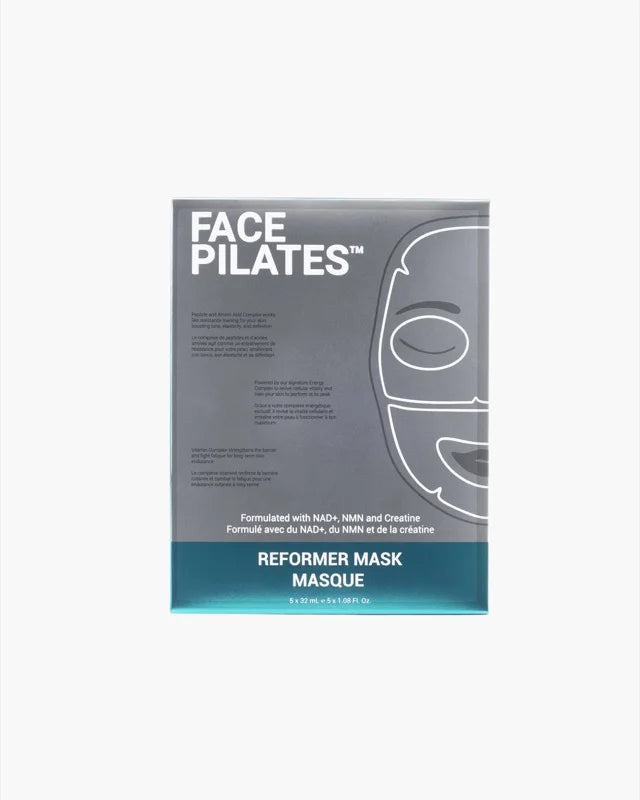
This is the thinking the Reformer Face Mask is built on. Rather than treating skin as a surface to be coated, it treats it as the energy organ it is — and delivers to it accordingly. Creatine sits high in the formula, laid directly onto the skin and held under an occlusive biocellulose hydrogel, right where the cells that need it live. It does not travel alone: it is paired with NMN and NAD+, two molecules central to how skin cells make and spend energy, and supported by osmoprotectants that steady the skin through dehydration and environmental stress.
For The Energy Layer
Creatine NMN NAD+
The cellular-energy trio, delivered together under occlusion and held against the skin long enough to work.
For Resilience And Comfort
Ectoin Trehalose Betaine Vitamin C
Osmoprotectants that steady cells through stress, with vitamin C and a peptide supporting tone and firmness.
The Under-Eye, Where Fatigue Shows First
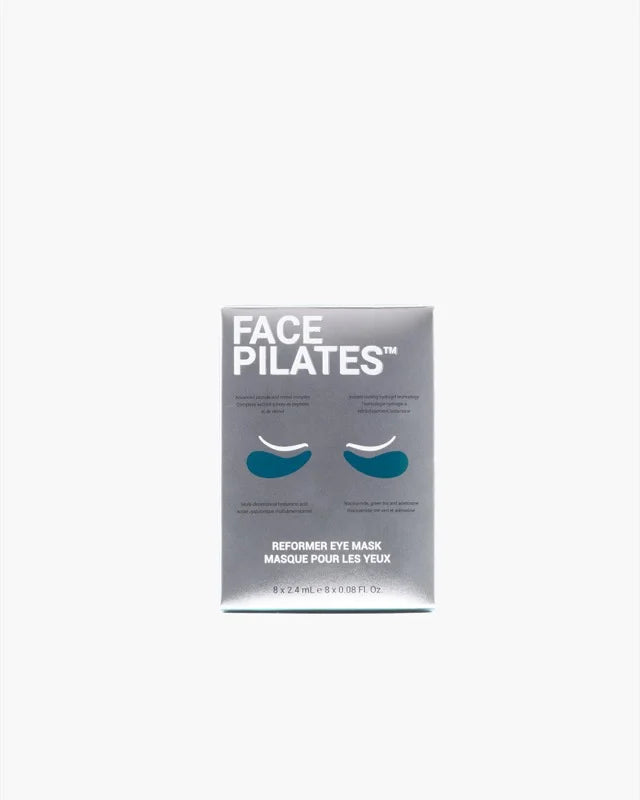
The skin around the eye is the thinnest and among the most energy-demanding on the face, which is why it is the first place a tired day announces itself. It benefits from the same energy-first thinking, delivered in a format shaped to the orbital bone. The Reformer Under-Eye Mask is the natural completion of the routine: a cooling hydrogel that conforms to the curve beneath the eye and releases slowly into a small, delicate area. The face mask makes the broad case for delivered energy; the under-eye finishes it exactly where the eye tends to give the game away.
What This Cannot Do — And Why Honesty Matters
Creatine is an energy-support ingredient, not a filler, a peel or a procedure. It will not restructure a face or erase deep, long-set lines, and it is not a replacement for the pillars of a considered routine — vitamin C, a retinoid where appropriate, and sunscreen, which remains non-negotiable. What it does is support the machinery that keeps skin renewing and defending itself, delivered to the layer that machinery lives in. Read plainly, that is a meaningful thing to add, and an honest one to promise. We say it because a realistic expectation is the most useful thing a brand can offer.
From the Reformer Collection
The Reformer Face Mask is where the creatine story lives — a biocellulose mask carrying creatine, NMN and NAD+ directly to the skin. The Reformer Under-Eye Mask finishes it, cooling and refining the one area that shows a tired day first. Taken together as the Combination duo, the two cover the whole conversation your face is having about energy — and cost a little less than meeting them one at a time, at $114.58 for both, a saving of $20.22 (15% off with code COMBINATION).
Considered questions
Is creatine only relevant for athletes?
No. Creatine is an energy-buffering molecule, and every cell that spends energy heavily can draw on it — skin included. Human skin has its own creatine kinase system, which is why topical creatine has a target to act on.
Can creatine really get into skin from a topical?
Yes. Under study conditions, creatine applied to the skin has been shown to penetrate to the dermis, the layer where collagen-building fibroblasts sit. Reaching that layer is what allows the visible firmness and wrinkle outcomes reported in the research.
If I already drink creatine, isn't my face covered?
Not meaningfully. Oral creatine is claimed overwhelmingly by skeletal muscle, with the surplus cleared by the kidneys; comparatively little is directed to skin. Topical application targets the tissue directly instead of relying on leftovers.
Does topical creatine replace vitamin C, retinoids or sunscreen?
No, and it is not meant to. Creatine is an energy-support layer that complements those actives rather than substituting for them. Sunscreen in particular remains essential.
Is it suitable for all skin, including men's?
Yes. Topical creatine is generally well tolerated across skin types, and some of the earliest antiwrinkle and antisagging data were gathered in male subjects.
Why a mask rather than a serum or cream?
Contact time. A hydrogel mask holds a measured dose under occlusion long enough for the active to cross the barrier, where a rub-in product often evaporates before it can. For creatine, that difference is the difference.
Drinking creatine feeds your muscles; putting it on your skin feeds your face. The Reformer Face Mask holds creatine — with NMN and NAD+ — against the skin where the ageing happens, and the Reformer Under-Eye Mask finishes the routine where a tired day shows first. Together as the Combination duo they cover the whole face, for a little less than buying them apart. Same molecule the gym made famous, sent at last to the right address.
A note on languageThis article is educational. The Face Pilates Reformer masks are cosmetic products; the descriptions here concern the appearance of the skin and the ingredients themselves, and are not a claim that any product treats, prevents or alters a medical condition or bodily function. Individual results vary, and study outcomes reflect the specific formulations and conditions tested. If you are pregnant, nursing or managing a kidney condition, speak with a qualified professional before beginning any new supplement.
Selected references:
- Peirano RI, Achterberg V, Düsing HJ, et al. Dermal penetration of creatine from a face-care formulation containing creatine, guarana and glycerol is linked to effective antiwrinkle and antisagging efficacy in male subjects. Journal of Cosmetic Dermatology, 2011;10(4):273–281. pubmed.ncbi.nlm.nih.gov/22151935
- Lenz H, Schmidt M, Welge V, et al. The creatine kinase system in human skin: protective effects of creatine against oxidative and UV damage in vitro and in vivo. Journal of Investigative Dermatology, 2005;124(2):443–452. pubmed.ncbi.nlm.nih.gov/15675966
- Fischer F, Achterberg V, März A, et al. Folic acid and creatine improve the firmness of human skin in vivo. Journal of Cosmetic Dermatology, 2011;10(1):15–23. onlinelibrary.wiley.com
- Blatt T, Lenz H, Koop U, et al. Topical application of creatine is multibeneficial for human skin. Journal of the American Academy of Dermatology, 2004;50(3, Suppl):P123. jaad.org
