

The Face Pilates Journal — Ritual
You wake, you look, and the face in the mirror is fuller than the one you went to bed with. The jawline is softer, the under-eyes heavier, the whole face carrying a weight it did not have the night before. The answer that has taken over feeds and spa menus alike is not a new device or a longer routine. It is movement — gentle, directional facial massage, finished with cool. What follows is an unhurried account of why the face holds water by morning, what lymphatic-style massage can and cannot do about it, and where the two masks in the Reformer collection close the ritual.
Lying flat all night lets fluid settle in the face, so it looks puffy first thing — most of all under the eyes. Light, upward massage that finishes toward the neck helps that fluid move, and a cool mask afterwards holds the refreshed look. The effect is real but temporary, which is exactly why it works best as a short morning habit rather than a one-off fix.
Why the face holds water by morning
Lying flat for seven or eight hours allows interstitial fluid — the watery substance that moves constantly through the tissues of the face — to settle rather than circulate. The under-eye shows it first. The skin beneath the lower lid is among the thinnest on the body, the small blood vessels sit closer to the surface, and there is little fat beneath to disguise a change in volume. A salty dinner, a glass of wine, a short night, a long flight, or the ordinary hormonal shifts across a monthly cycle each push a little more fluid into those tissues, and the thin skin around the eye registers it as puffiness or shadow before any other part of the face responds.
None of it is structural, and none of it is permanent. It is the reason a face can look swollen at seven in the morning and noticeably more defined by mid-morning: the fluid moves on its own as you sit upright, blink, speak, and begin the day. A morning ritual does not invent that effect. It brings it forward by an hour.
What lymphatic facial massage actually does
The lymphatic system has no central pump. It relies on movement, muscle activity, and external pressure to carry fluid through its vessels toward the nodes that sit low on the sides of the neck. Light, rhythmic, directional strokes across the face encourage that movement, which is why the practice has a long history in clinical settings for managing swelling after surgery. The evidence there is genuinely mixed: a systematic review of randomised trials found manual lymphatic drainage no more consistently effective than comparison care, and at least one surgical review found simple warmth reduced swelling more reliably than drainage did. For everyday morning puffiness the ambition is more modest than any of that literature, and more reliable. You are moving settled fluid so the face looks less swollen and more defined for a few hours.
A less-puffy face reads as a more sculpted one. The work is real and the result is temporary — which is exactly the right expectation to hold, and the reason this is a habit rather than a cure.
The morning ritual, step by step
The whole sequence takes about ten minutes, done on clean skin with enough slip that the hands glide rather than drag. The pace matters more than the pressure: this is drainage, not deep-tissue work, and the touch should be barely more than the weight of your own hands. It is the heart of the Face Pilates™ method — small, controlled, repeated movements that refresh the face the way reformer work conditions the body.
- Press a few drops of facial oil or a hydrating serum over slightly damp skin, then take three slow breaths before you begin.
- Sweep from the chin along the jaw to the ear and down the side of the neck, where the nodes sit.
- Move across the cheeks from the nose out toward the temples.
- Draw up and out across the brow and forehead to the hairline.
- Trace the bone around the eye socket with the lightest touch of all — never the lid.
Repeat each pass five or six times, always finishing toward the sides of the neck. Upward and outward, light and unhurried.
Where the Reformer Face Mask comes in
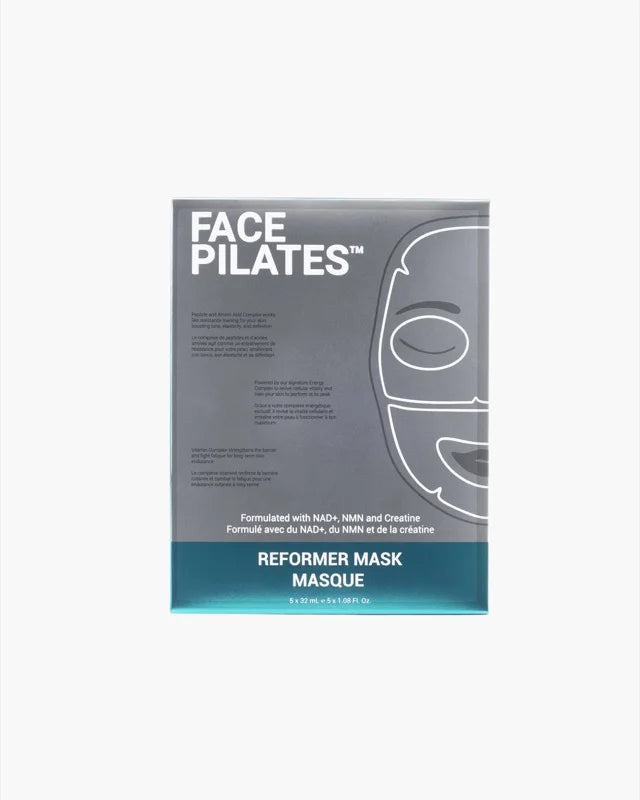
Once the fluid is moving, the next step is to hold the refreshed feeling rather than let it dissipate. The Reformer Face Mask is built on biocellulose — a fine nano-fibre lattice grown from fermented coconut water that adheres closely to the contours of the face and holds its actives against the skin. Smoothed on after massage, it cools and seals, supporting the barrier with humectants such as glycerin, betaine, trehalose, sodium hyaluronate and panthenol, while centella asiatica, aloe and ectoin calm the skin after the stimulation of massage. Its formula also carries caffeine and zinc gluconate, the ingredients the brand groups as its de-puffing and revitalising step. The face is left looking plumped and soothed rather than tight. Many people store the mask cool for this step; chilled, it adds a second, modest wave of de-puffing, since cold briefly tightens the look of the skin.
For the refreshed finish
Caffeine Zinc Gluconate Glycerin Sodium Hyaluronate Panthenol
Caffeine and zinc are the mask's revitalising pair; the humectant stack plumps and holds water at the surface.
For comfort after massage
Centella Asiatica Aloe Ectoin
Calming, barrier-supportive actives that settle the skin once the stimulation of massage is done.
The under-eye, where puffiness shows first
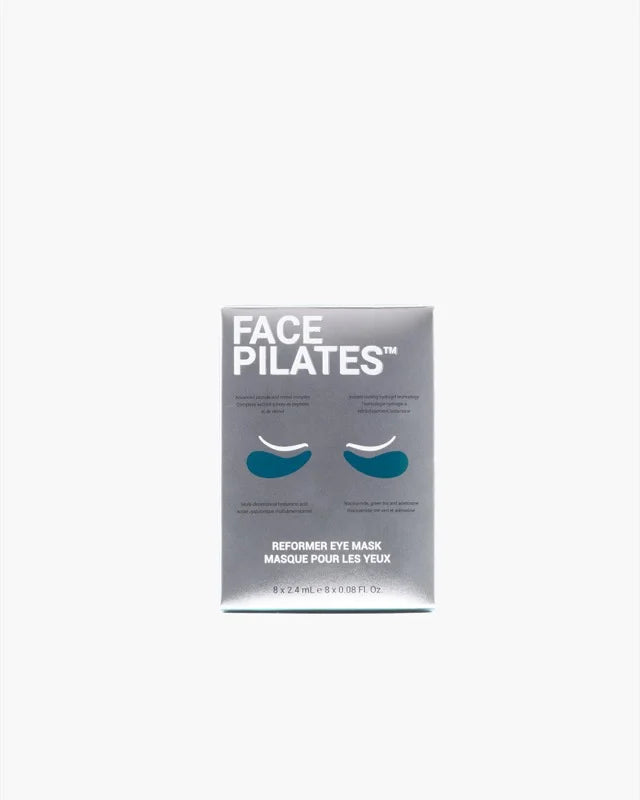
The orbital area deserves its own step, because it holds fluid more visibly than anywhere else on the face and is the first place a poor night announces itself. While the rest of the skin rests under the face mask, apply the Reformer Under-Eye Mask to clean, dry skin beneath each eye. It is a hydrogel — a water-rich polymer patch shaped to the orbital contour and worn cool — chosen for this region precisely because the under-eye benefits more from cooling, slow release, and contour-conforming wear than from a face-spanning fibre. Its formula is built around a SYN-AKE peptide complex with retinol, niacinamide and hyaluronic acid, supported by adenosine, aloe and allantoin: hydration and plumping from the hyaluronic acid, a brighter, more even tone from the niacinamide and botanicals, and a de-fatigued look from the cooling patch itself. Leave the patches in place for fifteen to twenty minutes — long enough for the cool to settle, not so long that the patch dries and begins to draw moisture back out of the skin. Press any remaining serum in with the ring finger rather than rubbing.
The hero complex
SYN-AKE Peptide Retinol Niacinamide Hyaluronic Acid
The line-smoothing, renewing and brightening actives the mask is formulated around — for refinement over time, not just the morning.
For the morning de-puff
Adenosine Aloe Allantoin
Cooling hydrogel plus de-fatiguing and soothing actives that leave the under-eye looking brighter, smoother and more rested.
A cream relies on the fingers to deposit it and evaporates within minutes. A cooled patch holds its actives against the thinnest skin on the face for the length of the wear — which is the whole point of finishing here.
A note on materials
The two masks in the Reformer collection are deliberately different substrates, built around different strategies. The full-face Reformer Face Mask uses biocellulose and a cellular-energy formula — NAD+, NMN and creatine — to span and grip the larger planes of the face. The Reformer Under-Eye Mask uses a SYN-AKE-peptide hydrogel that cools more, conforms to the curve of the orbital bone, and releases its payload slowly into a small, delicate area. Used together at the end of a morning ritual, each does what its format and formula do best.
What this ritual cannot do — and why honesty matters
Facial massage and cooling masks make the face look refreshed and less puffy. They are a morning reset, not a permanent change. The effect lasts hours rather than weeks, which is why this is something you do most mornings rather than once — and it is also what makes it sustainable: it is quick, it is pleasant, and the payoff is immediate. What it will not do is alter bone, shift fat pads, or resolve the structural and genetic components of a tear trough or a fixed dark circle; those answer to a dermatologist and to in-office options, not to a mask. Consistent sleep, adequate hydration, and disciplined sun protection do more for the eye area over a lifetime than any topical step in a morning. And puffiness that is persistent, severe, or markedly one-sided is worth raising with a doctor rather than a face mask, since it can point to something a skin-care routine is not meant to address. We say this because a realistic expectation is the most useful thing a brand can offer.
The reason this ritual has taken hold is not novelty. It folds three things people already want — a few quiet minutes, a visible result, and a routine that feels like care rather than correction — into the ten minutes before a day begins.
From the Reformer Collection
The Reformer Face Mask — a biocellulose mask grown from fermented coconut water, with a Cellular Energy & Longevity Complex of NAD+, NMN and creatine, a humectant barrier stack, vitamin C, and calming centella, aloe and ectoin. The Reformer Under-Eye Mask — a cooling hydrogel built around SYN-AKE peptide, retinol, niacinamide and hyaluronic acid, shaped to the orbital contour. Made to finish a Face Pilates™ treatment, and to close a quiet ritual at home.
Considered questions
How do you depuff your face in the morning?
Work light, upward strokes across a cleansed, lightly oiled face, always finishing toward the sides of the neck, for about five minutes. Then hold the effect with cool: a chilled biocellulose face mask and a hydrogel under-eye patch worn for fifteen to twenty minutes. The face looks less swollen and more defined for several hours.
Does lymphatic facial massage actually work?
It encourages the natural movement of fluid that settles in facial tissue overnight, so the face looks less puffy and more rested. The clinical literature on manual lymphatic drainage is mixed and concerns medical swelling rather than morning puffiness; for everyday use the effect is real but temporary, and it does not change facial structure.
Should I use a face mask before or after facial massage?
After. Massage first to move fluid and warm the skin, then apply the Reformer Face Mask to cool, hydrate and seal in the refreshed feeling. Storing the mask in the refrigerator beforehand adds a further de-puffing effect.
Do under-eye masks help with puffiness?
A cooled hydrogel patch briefly constricts the superficial blood vessels under the thin orbital skin and reduces the fluid that pools there, so the area looks brighter and less puffy in the short term. Use it in the morning on clean, dry skin for fifteen to twenty minutes — not overnight, since a dried-out patch can pull moisture back out of the skin.
How often can I do a facial depuffing ritual?
The massage is gentle enough for daily use. The masks suit two to three times a week as a maintenance rhythm, with the under-eye patch also worn the evening or morning before a flight, an event, or a photograph.
Will facial massage permanently sculpt my face?
No. It reduces the appearance of puffiness and gives a more defined look for a few hours by moving settled fluid. It does not alter bone or fat, which is why it is a habit you repeat rather than a one-time correction.
Massage moves the fluid; cool holds the result. The Reformer Face Mask plumps and soothes the larger planes of the face, and the Reformer Under-Eye Mask cools and refines the one area that shows a hard night first. None of it is dramatic, and none of it is permanent — it is ten quiet minutes that bring a more rested face forward by an hour, repeated on the mornings you want it most.
A note on languageThis article is educational. The Face Pilates Reformer masks are cosmetic products; the descriptions here concern the appearance of the skin and the ingredients themselves, and are not a claim that any product treats, prevents or alters a medical condition or bodily function.
Selected references:
- Müller M, et al. Manual lymphatic drainage and quality of life in patients with lymphoedema and mixed oedema: a systematic review of randomised controlled trials. Quality of Life Research, 2018;27(6):1403–1414. pmc.ncbi.nlm.nih.gov/articles/PMC5951867
- Pena WA, et al. Perioperative therapies to reduce edema after orthognathic surgery: a systematic review and meta-analysis. Journal of Stomatology, Oral and Maxillofacial Surgery, 2023. pubmed.ncbi.nlm.nih.gov/36307303
- Evaluation of the effect of manual lymphatic drainage on edema, pain and trismus after bilateral mandibular third-molar surgery: a randomised clinical trial. 2025. pubmed.ncbi.nlm.nih.gov/40140780
- Vogue Scandinavia — guidance on under-eye patch use, timing and overnight wear (2026). voguescandinavia.com
- Spaseekers — The Spa Trends Report 2026, on the rise of facial massage and at-home lymphatic drainage. spaseekers.com
