

Skincare Across Generations: How My Mother Taught Me to Treat My Skin Like Family
Three Toronto women on the rituals their mothers and grandmothers practised — and how the Reformer Under Eye Mask sits inside that inheritance rather than against it.
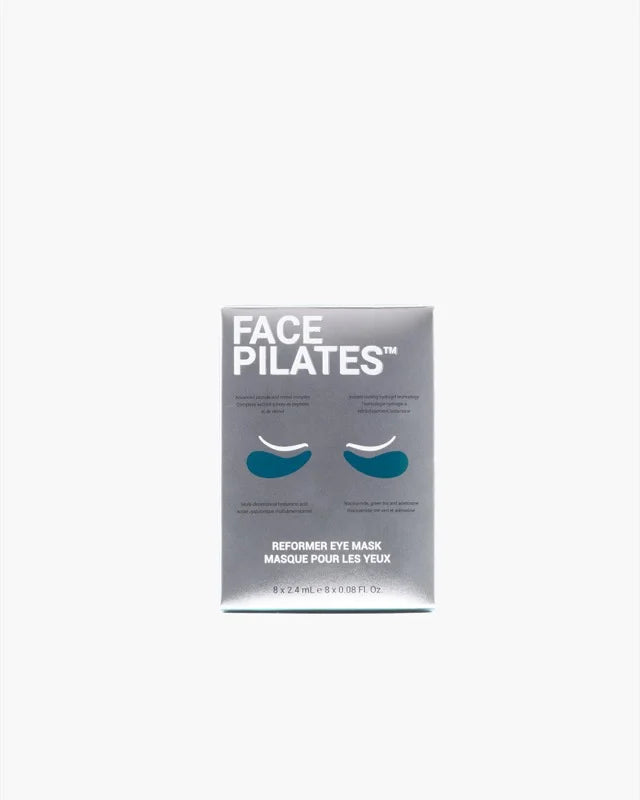
Skincare is, before it is anything else, a family practice. The rituals of cleansing, cooling, and preserving the face for the next day are handed across generations in homes long before they are professionalised by clinics. This is a short editorial gathering — three Toronto women, Hispanic, South Asian, and Caribbean, on what they learned from the women who raised them, and how the Reformer Under Eye Mask by Face Pilates™ sits inside that inheritance. The article is written from the conviction that a modern formulation made in Toronto, by a Registered Massage Therapist, for a globally diverse clientele, must respect the rituals it inherits rather than replace them.
The Hispanic ritual: agua de rosas and a cold spoon
The Toronto-based skincare writer who opens this piece keeps a small bottle of agua de rosas — rose water — in the refrigerator, a habit inherited from her mother in Mexico City. Every evening, after washing her face with whatever cleanser is in the house, she pats the cool water onto her skin with the back of her hand, never with a cotton pad. In the morning, before any cosmetic application, she places a cold spoon briefly against the under-eye. Both rituals are quietly defensible. Cold-spoon vasoconstriction is the same mechanism the Reformer Under Eye Mask deploys at higher dose, with longer wear, and with sodium hyaluronate carried in. The agua de rosas tradition is sound; rose water of cosmetic grade is a mild humectant and barrier-friendly. The modern reformulation does not contradict the inheritance — it concentrates it.
The South Asian ritual: turmeric, oil, and the weekly massage
From childhood in Punjab, the Toronto-based aesthetician quoted next recalls the haldi paste her grandmother prepared — turmeric, gram flour, milk, and a few drops of mustard oil — applied to the face the night before a wedding. The dermatological literature on turmeric (curcumin) is genuinely interesting: small studies suggest anti-inflammatory and tone-evening effects, with the strongest evidence behind topical and oral combination. The South Asian habit of weekly facial massage with oil predates the Western marketing of "gua sha" by centuries; its principles — lymphatic drainage, manual mobilisation of fascia — are precisely what the Face Pilates™ method, developed in a Toronto clinic by Thomas Tullo, RMT, formalises in eight steps. The Reformer Mask, applied at the end of such a session, consolidates the work with the nanofibre lattice of biocellulose and the five-active serum.
Skincare is, before it is anything else, a family practice.
The Caribbean ritual: aloe, coconut, and the long sleep
The Toronto editor whose voice closes the gathering keeps a small aloe plant on her kitchen counter — a habit inherited from a grandmother who lived in Trinidad. Aloe gel applied to under-eye puffiness in the morning, coconut oil massaged into the cheek and jawline at night, and a strict eight hours of sleep. Aloe is well-evidenced as a humectant and mild anti-inflammatory; coconut oil is comedogenic for some skins and a reasonable barrier lipid for others; the eight hours is the single most under-discussed beauty intervention in the dermatological literature. The Reformer Under Eye Mask, used twice weekly inside this practice, replaces nothing — it offers a more concentrated form of the cool, hydrating ritual the morning aloe already performs.
What modern formulation must respect
A modern cosmetic formulation built for global skin must respect three realities. First, melanin-rich skin is at higher risk of post-inflammatory hyperpigmentation from irritating ingredients; this is the reason the Reformer line is fragrance-free, alcohol-free, and built on humectants rather than acids or fragrant essential oils. Second, certain ingredients — kojic acid, hydroquinone above two per cent, retinoids without barrier support — should be introduced with caution, ideally with clinical guidance, for darker skin tones. Third, the assumption that "clean beauty" means "no ingredients" obscures the fact that the most evidence-based topical for melanin-rich skin is often niacinamide, which is neither traditional nor natural. The Reformer formulation sidesteps these pitfalls and performs the unspectacular work of barrier support and hydration that any skin tone benefits from.
What to pair the Reformer Under Eye Mask with, drawing on what was inherited and what evidence now supports: agua de rosas or aloe vera gel in the morning for a barrier-friendly humectant ritual; a niacinamide serum at five to ten per cent (Naturium 12%, The Ordinary 10%, Beauty of Joseon Glow Serum) for tone evenness in melanin-rich skin; a peptide eye cream of the cosmedical class to layer above the mask; and a foundational supplement stack — vitamin D3, iron where deficient, omega-3 EPA/DHA — that addresses the deficiencies most prevalent in Black, South Asian, and Hispanic adult populations in Canada.
The supplements that matter for darker skin tones
Three supplements have particular relevance. Vitamin D3 at one to two thousand IU daily is the single most consequential — adults with melanin-rich skin synthesise vitamin D less efficiently from sunlight, and deficiency is widespread across Black, South Asian, and Hispanic populations in Canada, where ultraviolet exposure is seasonal. Iron deficiency is overrepresented in women of South Asian and African descent, and routine bloodwork followed by supplementation under clinical guidance can produce visible changes in skin tone, particularly around the under-eye. Omega-3 fatty acids at one to two grams of EPA plus DHA are anti-inflammatory and support barrier lipid synthesis. A fourth, marine collagen peptides at ten to fifteen grams daily, has the most consistent dermatological evidence behind it across all skin tones. None of this is exotic; it is the patient, evidence-based work that the women who raised us already understood instinctively.
In plain language, what comes next
The skincare ritual a person was raised with is rarely wrong. It is, more often than not, a reasonable practice that modern formulation can support and extend rather than replace. The Reformer Under Eye Mask by Face Pilates™ is built on this premise: that hydration, cooling, and barrier respect are constants across cultures, generations, and skin tones, and that a global Toronto clientele deserves a product designed with that range in mind from the formulation up. Use the mask alongside the rituals you grew up with, not instead of them. The result is continuity rather than rupture.
Considered questions
Is the Reformer formulation appropriate for melanin-rich skin?
Yes. The fragrance-free, alcohol-free formulation reduces the risk of post-inflammatory hyperpigmentation that aggressive ingredients can trigger in deeper skin tones. It is consistent with the post-procedure profile dermatologists recommend.
Can I use this if I have post-inflammatory hyperpigmentation?
The mask itself is appropriate. For active pigment correction, pair it with a niacinamide serum (5–10%) and consult a dermatologist for prescription tranexamic acid or hydroquinone where indicated.
Are traditional remedies like turmeric or aloe compatible with the mask?
Compatible — apply traditional treatments at a different time of day from the mask. The mask is a finishing step; agua de rosas or aloe can sit in the morning routine without conflict.
Should I take a vitamin D supplement if I am a person of colour?
Speak to your physician about bloodwork; vitamin D deficiency is widespread in adults with melanin-rich skin living in northern climates. Supplementation at 1,000–2,000 IU daily is the typical recommendation when deficiency is confirmed.
Is the product tested across Fitzpatrick skin types?
The ingredient profile is well-tolerated across all Fitzpatrick types. The brand actively works to feature a representative range of skin tones in its product imagery and clinical materials.
Does the brand offer Spanish-language support?
A Spanish-language version of the storefront and journal is in development. Subscribe to the Face Pilates Letter to be notified at launch.
Vaughn AR et al., Phytotherapy Research — Effects of turmeric (curcumin) on skin health: a systematic review (2016).
Mohammad A et al., Journal of Drugs in Dermatology — Vitamin D status in adults with skin of color.
Walsh JS et al. — Vitamin D in adults with darker skin tones: a clinical review.
Boston Dermatology Advocate — What are under eye patches for, and do they work?
