

The Face Pilates™ Method: A Clinician's Guide to Facial Movement
An honest account of what the method is, what it asks of you, and what the published evidence says about training the muscles of the face — written by the clinic that developed it.
The face has more than forty muscles, the majority of them attached not to bone but to other muscles or to skin. Like every other muscle group in the body, they respond to deliberate, repeated movement — they tone, they tire, and they adapt. The Face Pilates™ method is a structured, eight-step facial protocol developed at AMAN Spa Toronto by Thomas Tullo, a Registered Massage Therapist in Ontario. It draws from manual therapy, myofascial release, lymphatic drainage, and progressive resistance, and it closes with a finishing sheet mask. This article explains what the method actually involves, what the peer-reviewed evidence says about facial exercise, and what a beginner can reasonably expect after four, twelve, and twenty weeks of consistent practice.
What the Face Pilates™ method is
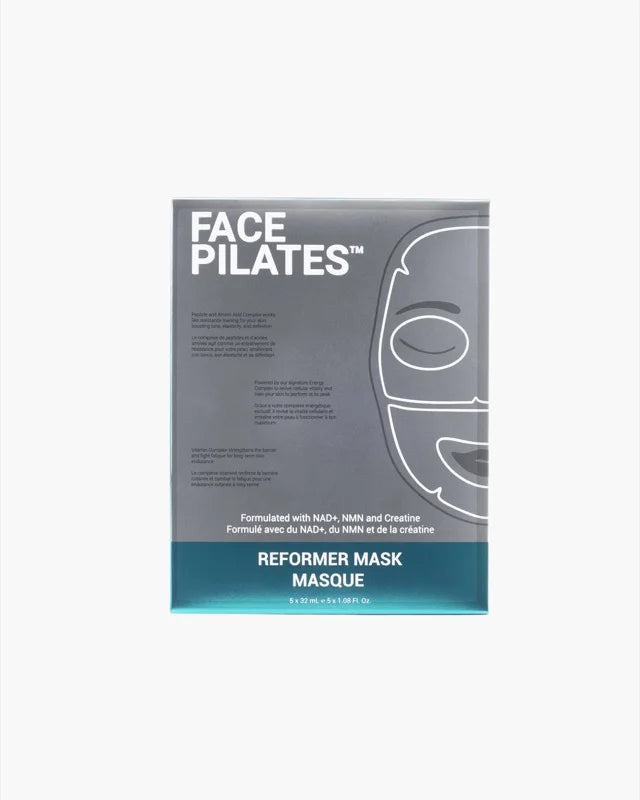
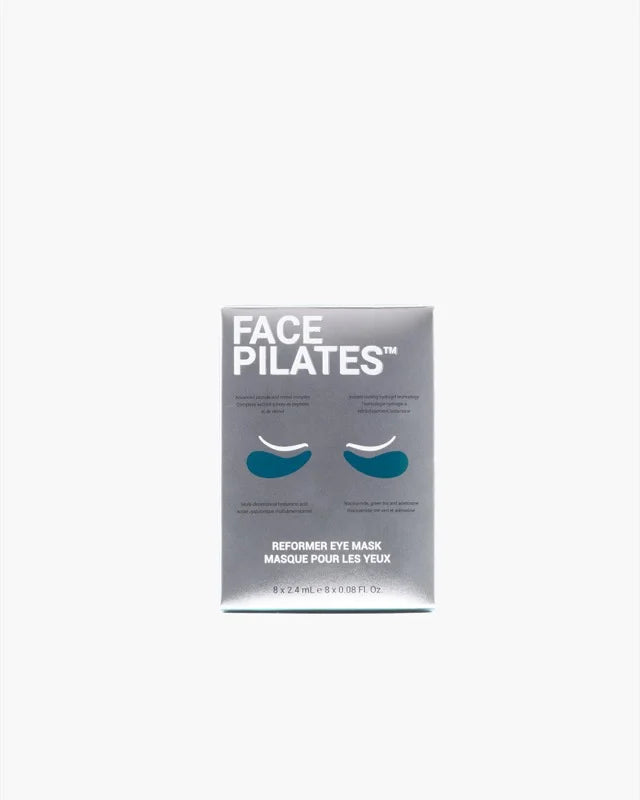
The method is a sequence of manual and movement-based interventions delivered in eight steps. The early steps focus on releasing the connective tissue beneath the skin — the superficial musculoaponeurotic system — using slow, considered manual work modelled on the techniques used in registered massage therapy. Subsequent steps introduce progressive isometric and isotonic engagement of the facial muscles themselves, drawing on the same principles that govern body Pilates: control, breath, alignment, and the careful avoidance of recruitment patterns that would deepen existing lines. The method then turns to lymphatic drainage, which moves fluid out of the orbital and submandibular regions and reduces the visible puffiness that obscures the underlying tone. The session closes with the Reformer Mask for the full face and, where indicated, the Reformer Under Eye Mask for the orbital region — sheet masks chosen to consolidate the circulatory and lymphatic work just performed.
The Face Pilates™ method is not a face massage designed to prevent disfunction of the facial tissues and promote their health and ideal functioning. It is a wellness driven protocol for long term benefits.
What the published evidence says
The most cited investigation of facial exercise in the dermatological literature is the 2018 study by Alam and colleagues, published in JAMA Dermatology. The study followed sixteen women aged forty to sixty-five through a twenty-week programme of daily, structured facial exercises, with blinded physician raters estimating their apparent age at baseline, week eight, and week twenty. The raters' average age estimate fell from 50.8 years at baseline to 48.1 years at week twenty — a perceptible improvement that the authors attributed in part to apparent hypertrophy of the cheek musculature. The investigators were careful to note the limits of the work: a small sample, a self-selected cohort, and the absence of a control group. We refer to it not as proof, but as the most credible evidence currently available that consistent, structured facial movement is associated with a visible difference in how the face is read.
A facial muscle is a muscle. It responds to attention, to repetition, and to rest in the same way every other muscle in the body does — neither faster nor more dramatically.
How the Face Pilates™ method differs from face yoga
Face yoga is the popular shorthand for self-administered facial exercise, often delivered by social media instructors and consisting principally of held positions and exaggerated expressions. There is overlap between face yoga and the Face Pilates™ method, in the way that there is overlap between yoga and Pilates of the body. The differences matter, however, and they are three. First, the Face Pilates™ method is delivered by a Registered Massage Therapist trained in anatomy and contraindications, which means that the manual portion of the work is delivered with the same standards a body massage would be. Second, the method emphasises control and breath over expressive intensity, on the principle that exaggerated repetitions can deepen the very lines a patient seeks to soften. Third, the method integrates lymphatic drainage and a clinical finishing protocol, including post-treatment masking, that face yoga generally does not.
The principles that govern the work
Four principles run through every Face Pilates™ session. The first is release before activation: tissue that is held tight by chronic tension does not respond well to additional stimulus, and the manual work that opens the session prepares the skin and fascia to receive what follows. The second is controlled engagement: each muscle is recruited deliberately, in isolation where possible, with attention to the line of pull and the surrounding tissue. The third is lymphatic clearance, because muscular work generates metabolic by-product that the lymphatic system must move out of the area in order for the tone gained during the session to be visible at the surface. The fourth is quiet closure: the finishing mask is not an afterthought; it consolidates the hydration and barrier support that allow the work just done to show.
What you can reasonably expect
Realistic expectations are the discipline of any honest practice. The published evidence and the clinic's own observation suggest the following trajectory. In the first four weeks, the most consistent change is in the visible appearance of puffiness and tone, particularly around the jaw and the orbital region, where lymphatic drainage works quickly. By weeks eight to twelve, the reduction in held tension across the brow, the temples, and the masseter becomes more durable, and patients commonly report that their face looks more relaxed in repose. By week twenty, in line with the Alam study, the cumulative effect on the apparent fullness of the cheek and the line of the jaw is what other people begin to notice. The work compounds with sleep, hydration, sun protection, and a disciplined home routine. It does not compound with any of these absent.
What the method cannot do
It is not a substitute for in-office aesthetic care. Structural concerns — deep tear-trough depth, age-related fat-pad loss, dermal melanin deposition, advanced photo-damage — require interventions the method does not perform, including dermal fillers, laser resurfacing, pigment-targeted treatments, and, in some cases, surgical correction. The Face Pilates™ method is best understood as a foundation: it builds and maintains the muscular tone, lymphatic circulation, and fascial mobility on which any subsequent aesthetic intervention rests. Patients who are considering injectables or energy-based devices often find that a course of Face Pilates™ improves the outcome of those interventions, because the underlying tissue is in better condition to receive them.
The original Face Pilates™ method is taught and practised at AMAN Spa Toronto. The method is a registered trade mark in Canada and is delivered by Thomas Tullo, RMT, and the trained team at the clinic. If a practitioner outside AMAN Spa Toronto describes their service as Face Pilates™, please confirm that they are formally trained in the method.
The home practice that supports the clinic
The clinical session is the spine of the method, but the home practice is what allows the work to compound. The recommended home rhythm is a short, ten-to-fifteen minute daily ritual that includes a gentle release of the masseter and temples with clean fingers; a slow lymphatic sweep from the centre of the face outward; a brief, controlled engagement of the cheek and jawline through deliberate, restrained movement; and a finishing application of barrier-supportive skincare. Twice a week, this routine is extended to include the Reformer Mask for the full face. Once or twice a week, particularly in the days before an event or a long flight, the orbital region receives the Reformer Under Eye Mask. None of this is heroic. It is, in fact, deliberately quiet.
The Face Pilates™ method takes seriously the fact that the face is built of muscles, fascia, and lymphatic tissue, and that all three respond to deliberate, repeated attention. It draws from the standards of registered massage therapy, from the principles of Pilates, and from the cosmetic dermatology literature on facial exercise. It is realistic about what it can and cannot do. Practised consistently, in clinic or at home, it builds the kind of slow improvement that compounds across the seasons and supports the rest of an honest skincare routine. If any of this resonates, the next step is either a session at the clinic or a quiet, ten-minute beginning at home.
Considered questions
Is facial exercise supported by clinical evidence?
The most cited study is Alam and colleagues' 2018 paper in JAMA Dermatology, in which a twenty-week programme of daily facial exercise was associated with a perceptible reduction in apparent age and an increase in cheek fullness. The evidence base is modest and the authors note its limits, but it is the best currently available.
How is Face Pilates™ different from face yoga?
Face Pilates™ is delivered by a Registered Massage Therapist; emphasises control and breath rather than exaggerated expression; integrates lymphatic drainage; and closes with a clinical finishing protocol that includes post-treatment masking. Face yoga overlaps in spirit but rarely in delivery.
How quickly will I see results?
Lymphatic and tension changes are visible within the first four weeks. Tone and the appearance of cheek fullness build over twelve to twenty weeks of consistent practice. The work compounds with sleep, hydration, and sun protection; it does not compound with any of these absent.
Does Face Pilates™ replace Botox or fillers?
No. It is a foundation, not a substitute. Patients who use injectables often find that consistent Face Pilates™ improves the outcome of those interventions, because the underlying tissue is in better condition to receive them.
Can I learn the method at home?
An in-clinic session at AMAN Spa Toronto remains the most thorough introduction to the method, because the manual portion of the work requires hands-on instruction. A short daily home practice supports the in-clinic work and is taught at the first appointment.
Is the method appropriate during pregnancy or after surgery?
Please consult your obstetric or surgical provider before booking. The method involves manual work to the face and neck, and certain post-operative timelines call for modification or delay.
Alam M, Walter AJ, Geisler A, et al., JAMA Dermatology — Association of Facial Exercise With the Appearance of Aging (2018).
PMC — Association of Facial Exercise With the Appearance of Aging (full text).
Northwestern University — Facial exercises help middle-aged women appear more youthful, summary of the Alam study.
AMAN Spa Toronto — The Face Pilates™ method at the originating clinic.
