

Why Biocellulose Is the Substrate of Choice After a Facial
On the quiet engineering of a sheet mask grown from fermented coconut water — and why dermatologists reach for it after laser, microneedling, and the most considered facials. Featuring the Reformer Mask by Face Pilates™.
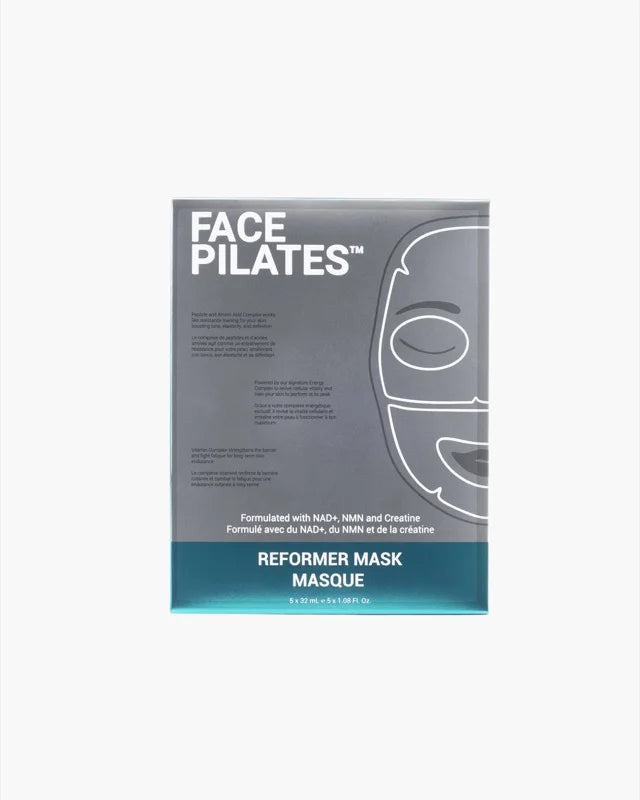
Not every sheet mask is built the same. A biocellulose mask is grown, not woven — produced by friendly bacteria that spin a microscopic web of pure cellulose threads. The result is a translucent, second-skin layer that holds an extraordinary amount of water against the face. It is the format dermatologists place on patients after lasers, microneedling, and deep peels, because it conforms, calms, and cools where ordinary fabric cannot. This article explains what biocellulose actually is, how it differs from cotton and hydrogel sheet masks, and why the Reformer Mask by Face Pilates™ chose biocellulose for the full-face step that closes a treatment.
What biocellulose actually is
Biocellulose, sometimes written bio-cellulose or bacterial cellulose, is a polymer produced by bacteria of the Komagataeibacter and Acetobacter genera as they ferment a sugar-rich medium. In cosmetic production, the medium is most commonly coconut water; the bacteria float on its surface and, over several days, weave a dense lattice of pure cellulose nanofibres that gradually thickens into a translucent, gelatinous sheet. The sheet is then washed of bacteria, sterilised, and saturated with the cosmetic serum that the finished mask will carry. The structure is materially different from cotton fibre. Bacterial cellulose has a much smaller fibre diameter, a higher surface area, and a porosity that allows it to hold water at approximately one hundred times its dry weight. It is, in effect, an engineered second skin.
Why dermatologists adopted it first
Long before biocellulose entered the cosmetic aisle, it was used in clinical wound care. Biocellulose dressings were originally developed as a temporary artificial skin to treat severe burns and chronic ulcers, and have been studied for decades for their capacity to support re-epithelialisation, retain moisture in the wound bed, and reduce pain on application. The properties that make the material useful in burn care are the same properties that make it useful after a deliberately controlled cosmetic injury such as a laser resurfacing or a microneedling session. A 2024 randomised split-face study published in the Journal of Cosmetic Dermatology by Siperstein and colleagues evaluated a biotech cellulose mask after microneedling with radiofrequency, non-ablative fractional laser, and full erbium:YAG resurfacing. The study reported improved patient comfort, reduced perceived downtime, and a cooling effect that patients described as one of the most pleasant elements of their recovery.
A cotton sheet mask is a vehicle. A hydrogel patch is a delivery system. A biocellulose mask is a second skin — grown to fit the face it covers.
How biocellulose differs from cotton and hydrogel
A traditional sheet mask is cut from non-woven cotton or rayon and saturated in serum. The fibre is comparatively coarse, the adhesion to facial contour is loose, and the mask tends to dry against the skin within ten to fifteen minutes — at which point it begins to draw moisture out of the stratum corneum rather than into it. A hydrogel patch is a polymer lattice that holds water within its structure, releases actives gradually, and is excellent at conforming to small subunits such as the under-eye area. Biocellulose occupies a different category again. Its nano-fibre weave is so fine that, when applied wet, the mask draws into every contour by capillary action; it holds its hydration for the duration of wear; and it transmits the cool of the serum directly to the skin without the textile interruption a cotton mask creates. After a facial that has worked the skin — through microcurrent, gua sha, manual lymphatic drainage, LED, or the Face Pilates™ method itself — biocellulose finishes the treatment in a way the other two formats simply cannot.
The actives that perform inside a biocellulose mask
Because the biocellulose lattice holds water with such avidity, it carries water-soluble actives gracefully and oil-soluble actives less so. The Reformer Mask formulation is consistent with the post-procedure profile that dermatologists prefer: glycerin and sodium hyaluronate for sustained hydration; betaine and trehalose to support cellular osmolarity and barrier integrity; and panthenol to soothe transient redness and reinforce the lipid barrier. The formulation is fragrance-free and alcohol-free. There are no actives in the mask that would be inappropriate to apply to skin freshly treated with laser, microneedling, microcurrent, or a peel — which is the standard a clinician applies when choosing a finishing mask for a patient.
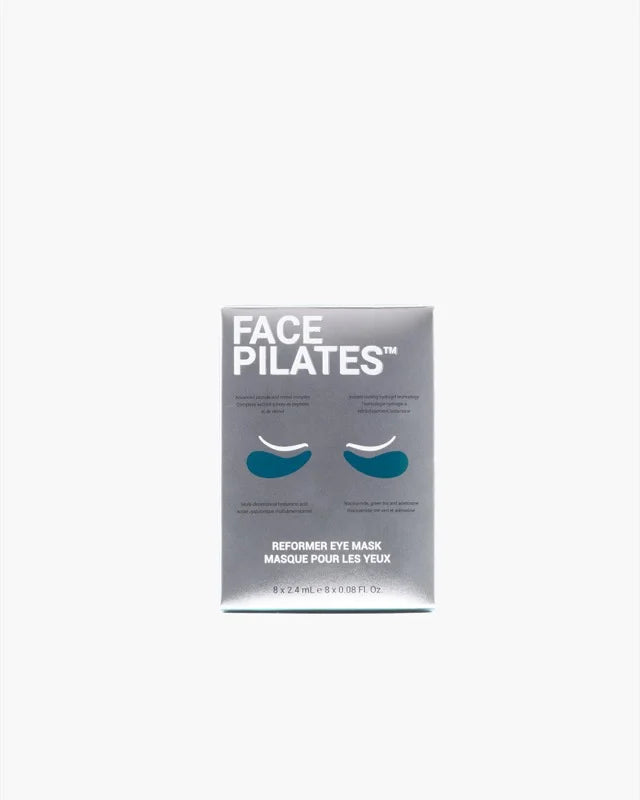
The Reformer Mask is biocellulose, sized to the contours of the full face. The companion Reformer Under Eye Mask is hydrogel, sized to the orbital bone. The two substrates are not interchangeable; each is selected for the area it serves and the role it plays at the close of a treatment.
When to use a biocellulose mask
The Reformer Mask is designed to close a treatment. In clinic, it is applied as the final step of an eight-step Face Pilates™ session at AMAN Spa Toronto, after the manual, lymphatic, and microcurrent work is complete, and worn for fifteen to twenty minutes while the patient rests. At home, it has three principal occasions. First, after any in-office treatment that uses microcurrent, gua sha, LED, or buccal massage, where the mask consolidates the depuffing and circulatory work just performed. Second, after a procedural treatment such as a laser, microneedling, microdermabrasion, or a gentle peel, where the mask cools and supports the barrier without introducing actives that would irritate the skin. Third, as a weekly maintenance ritual on a Sunday evening, where consistent use compounds across the seasons and supports the visible appearance of resilient, well-rested skin.
How to apply the Reformer Mask
Cleanse the skin with a gentle, fragrance-free cleanser and pat dry. Open the pouch with clean fingers, lift the mask out by the top edge, and remove the inner film. Position the mask over the brow and align the eye openings, then smooth the mask down toward the jaw, pressing gently along the contours of the cheek and the line of the nose. Lie still for fifteen to twenty minutes, eyes closed. The mask should never dry on the skin; once it begins to lose its cool, slightly tacky finish, remove it, fold it inwards, and discard. Press any remaining serum into the skin with the ring fingers rather than rubbing. Follow with sunscreen in the morning, or a barrier moisturiser in the evening.
What biocellulose cannot do — and why honesty matters
Biocellulose is a substrate. It is the highest-performing format currently available for delivering water-soluble actives to a fully cleansed face after treatment. It is not, however, a substitute for sun protection, sleep, or the disciplined topical routine that produces durable results over months. A patient who lasers their face beautifully and then sleeps four hours a night and skips sunscreen will not be rescued by any mask. We say this because the brand is built on the work that is done in the clinic and the work that is done at home — and a finishing mask is one of many quiet steps, not the single decisive one.
Biocellulose works because it was originally engineered to repair the most fragile skin imaginable. Brought into the cosmetic context, it offers a sheet that conforms like a second skin, holds water through the full wear, and delivers a gentle, post-procedure-grade ingredient stack without the irritation potential of fragrance, alcohol, or strong actives. The Reformer Mask by Face Pilates™ chose this format deliberately, to close the in-clinic treatment, to support the skin in the days after a laser or peel, and to reward the patient who builds a weekly ritual. Used well, it is the quietest step in the routine and one of the most consequential.
Considered questions
What is biocellulose made from?
Biocellulose is a pure cellulose lattice produced by bacteria of the Acetobacter and Komagataeibacter genera as they ferment a sugar-rich medium, most commonly coconut water. The bacteria are washed away and the sheet is sterilised before it is saturated with serum.
Is the Reformer Mask vegan?
The substrate is fermented from coconut water and contains no animal-derived materials. The serum is also free of animal-derived ingredients.
Can I use the Reformer Mask after a laser or microneedling treatment?
Biocellulose is the format dermatologists most often select after laser, microneedling, and similar procedures, because it cools, conforms, and supports re-epithelialisation. The Reformer Mask is fragrance-free, alcohol-free, and consistent with that post-procedure profile. Always follow your provider's specific aftercare protocol.
How often should I use the Reformer Mask?
For most skin, once a week as a Sunday-evening ritual is a sustainable rhythm. The mask can also be used after any in-office treatment that has worked the skin, and on the day before an event for a refined, well-rested finish.
How is it different from the Reformer Under Eye Mask?
The Reformer Mask is a biocellulose full-face sheet, designed to close a treatment. The Reformer Under Eye Mask is a hydrogel patch shaped to the orbital bone, designed to address the periorbital area specifically. Different substrates, different roles, designed to be used together.
Should the mask be cold when applied?
It does not need to be, but storing the pouch in the refrigerator deepens the cool, restful sensation on application and may further reduce surface puffiness — particularly the day before an event.
Siperstein et al., Journal of Cosmetic Dermatology — Randomized split-face study using a post-procedural biotech cellulose mask to improve patient comfort and downtime (2024).
PubMed — Siperstein et al. abstract on biocellulose post-procedure mask.
MDPI Cosmetics — Hydrogels and Hyaluronic Acid-Based Hydrogels in Transdermal Delivery and Cosmetic Applications (2025) (for comparison of cosmetic substrates).
PMC — Hydrogel-Based Active Substance Release Systems for Cosmetology and Dermatology: A Review (2020).
