

Skin During and After GLP-1: A Clinician's Guide to Supporting the Face Through Weight Change
An empathetic, evidence-led guide to the changes the face goes through during semaglutide, tirzepatide, and related therapies — and the topical, in-clinic, and supplemental work that supports the skin through them.
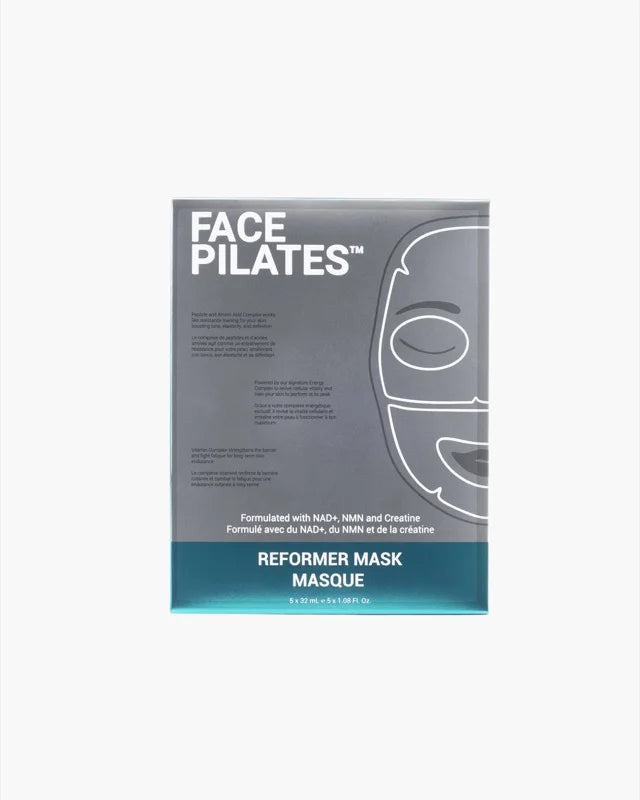
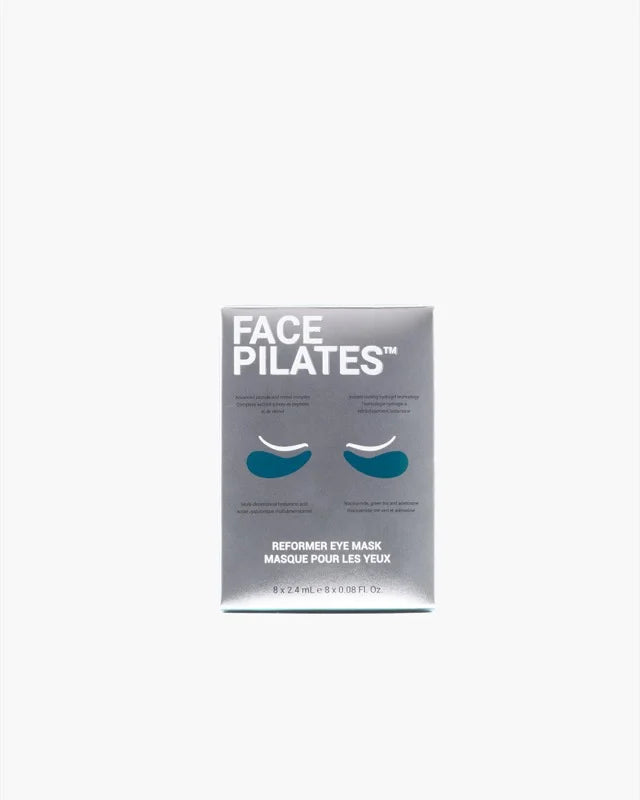
If you are on a GLP-1 medication — semaglutide, tirzepatide, or one of the related therapies — or you are about to start, this article is written for you. It is written without judgement of the medical decision you have made with your prescribing clinician, and with respect for the body change you are navigating. The face changes during rapid weight loss; sometimes visibly. The patterns the press calls "Ozempic face" — facial volume loss, skin laxity, periorbital hollowing — are real, and there is meaningful work that the right topical routine, the right in-clinic care, and the right supplement support can do alongside the medication. The article walks through what is happening physiologically, what to use on the skin, what to take to support muscle and tissue, and where the Reformer Mask and Reformer Under Eye Mask by Face Pilates™ fit.
What is actually happening on the face
Rapid weight loss reduces subcutaneous fat across the body, including in the face. The cheek fat pads, the buccal fat, and the orbital fat thin in proportion to the total loss. Skin, which had been stretched around larger volume, does not retract perfectly to the new contour; the result is visible laxity along the jaw and the cheek. Additionally, GLP-1 medications can reduce appetite to a degree that leads to underconsumption of protein, which the body draws from lean muscle — including the facial muscles that give the cheek its lift and the jawline its definition. Finally, hydration is often quietly lower than it should be, and skin hydration registers on the face within days. These are descriptive realities, not value judgements. Understanding them is the precondition for addressing them.
What the Face Pilates method supports
The Face Pilates™ method, developed at AMAN Spa Toronto by Thomas Tullo, RMT, addresses two of the three layers that change during GLP-1 weight loss. The manual and lymphatic portion of the method moves residual fluid out of the orbital and submandibular regions and reduces the laxity-related shadowing along the jaw. The controlled muscle engagement portion of the method — the isolated, deliberate work on the cheek lifters, the mouth corners, and the orbital muscles — supports the muscular tone the body's protein deficit has been drawing from. None of this replaces the structural fat that has been lost; some of that loss is durable. What the method does is preserve and rebuild the muscular layer that gives the face its shape, and consolidate the surface with the Reformer Mask and Reformer Under Eye Mask as closing steps.
The face does not need to be apologised for. It needs to be supported — with the medication, alongside the medication, and through the months after.
The topical routine during the journey
The topical work during GLP-1 use is concentrated on hydration, barrier support, and collagen-supportive ingredients. The Reformer Mask, used twice weekly, consolidates barrier and hydration with its five-active serum — glycerin, betaine, trehalose, sodium hyaluronate, and panthenol. A peptide moisturiser of the cosmedical class — Medik8 Liquid Peptides, Drunk Elephant Protini, La Roche-Posay Toleriane Double Repair — supports the dermal matrix during the period of fastest change. A prescribed retinoid (tretinoin 0.025% or 0.05%, or adapalene 0.1%) accelerates collagen turnover; bakuchiol is the gentler over-the-counter alternative. A medical-grade sunscreen of SPF 50 (EltaMD UV Clear, La Roche-Posay Anthelios) is the single non-negotiable step. Hyaluronic acid serums (SkinCeuticals H.A. Intensifier, The Ordinary Hyaluronic Acid 2% + B5) layered under moisturiser support the immediate plumping the dermis benefits from.
The supplement stack that matters most
The supplement stack for GLP-1 users differs from the general anti-aging stack in one critical respect: protein intake becomes the central variable. Aim for one to one and two-tenths grams of protein per kilogram of body weight per day, distributed across meals; this is the threshold below which muscle loss accelerates in caloric deficit. Marine collagen peptides at fifteen grams daily — Vital Proteins, Sproos, Bulletproof — provide skin-specific amino acid support and have multiple randomised trials behind them for skin elasticity. Creatine monohydrate at three to five grams daily preserves lean muscle mass in caloric deficit, with substantial evidence in the resistance-training literature and emerging evidence for facial muscle preservation specifically. Omega-3 EPA plus DHA at two to three grams daily is anti-inflammatory and supports both barrier lipids and the joint comfort that often accompanies weight loss. Magnesium glycinate at three to four hundred milligrams in the evening supports sleep quality, which compounds skin and muscle recovery. Vitamin D3 at one to two thousand IU daily corrects the deficiency rapid weight loss often unmasks. A B-complex (Thorne Basic B Complex) supports the metabolic load.
What to pair with your prescribed medication, in dialogue with your clinician: a peptide moisturiser (Medik8 Liquid Peptides, Drunk Elephant Protini); a prescribed retinoid or bakuchiol; a medical-grade SPF 50 (EltaMD UV Clear, La Roche-Posay Anthelios); a hyaluronic acid serum (SkinCeuticals H.A. Intensifier); a Face Pilates™ session at AMAN Spa Toronto when geography allows; and a six-supplement compound — adequate protein intake (1.0–1.2 g/kg), marine collagen peptides, creatine monohydrate, omega-3 EPA/DHA, magnesium glycinate, vitamin D3 — that addresses both the muscular and the skin layer in parallel.
What in-clinic care can add
For readers within reach of Toronto, the in-clinic Face Pilates™ session is the strongest single-visit intervention for the muscular and lymphatic layer. For readers elsewhere, four dermatological options are worth considering, in dialogue with a board-certified provider: collagen-stimulating injectables (Sculptra, Radiesse) for structural volume restoration where it is clinically appropriate; microneedling with radiofrequency (Morpheus8) for skin tightening; hyaluronic acid fillers placed conservatively by a clinician experienced with the post-weight-loss face; and lower-energy laser resurfacing (Clear + Brilliant, fractional non-ablative) for surface tone. None of these is necessary for everyone, and none should be undertaken without clinical conversation about timing relative to ongoing weight change. The Reformer Mask, used the night after any of these procedures, supports the recovery period with its fragrance-free, alcohol-free, post-procedure-appropriate profile.
If you are taking a GLP-1 medication, the most consequential single thing you can do for your face is to consume enough protein. The second most consequential is to support the muscular layer with deliberate facial movement and the lymphatic layer with manual or assisted drainage. The third is to consolidate the surface with a small, disciplined topical routine and a Reformer Mask twice weekly. The fourth is the supplement stack — marine collagen, creatine, omega-3, magnesium, vitamin D3 — that addresses what the medication is changing at the body level. The fifth, where clinically appropriate and after discussion with your prescriber and a dermatologist, is the in-clinic care that can address structural change directly. The face does not need to be apologised for. It needs to be supported.
Considered questions
Is "Ozempic face" reversible?
Partially. Skin laxity often improves with collagen-supportive topicals, consistent muscular work, adequate protein, and time. Structural fat loss is more durable; collagen-stimulating injectables and conservative filler can address it where clinically appropriate. Speak with a board-certified dermatologist.
How much protein should I eat on a GLP-1 medication?
Aim for 1.0 to 1.2 grams of protein per kilogram of body weight per day, distributed across meals. Below this threshold, muscle loss — including in the face — accelerates in caloric deficit. Consult your prescriber and a registered dietitian for personalisation.
Is creatine appropriate for GLP-1 users?
Creatine monohydrate at three to five grams daily preserves lean muscle in caloric deficit and is one of the most rigorously studied supplements. Discuss with your physician if you have kidney disease or other contraindications.
Can I use the Reformer Mask while on GLP-1 medication?
Yes. The mask is a topical product and does not interact with GLP-1 medications. The under eye mask is fragrance-free, and both masks use alcohol-free formulation that are appropriate for skin going through change.
Should I wait to consider injectables until my weight has stabilised?
The conservative approach is to wait until weight has been stable for three to six months, so the clinician is treating the final contour rather than a moving target. Discuss timing with your dermatologist.
Will Face Pilates restore the cheek fat I have lost?
No. The method addresses the muscular and lymphatic layers and supports skin condition. Structural fat loss requires collagen stimulators or fillers if restoration is desired, in clinical conversation with a dermatologist.
Humbert R et al. — Facial changes in patients receiving GLP-1 receptor agonists (clinical review).
Phillips SM, Van Loon LJC — Dietary protein for athletes — basis for protein intake recommendations in caloric deficit.
Schunck M et al. — Collagen peptides effect on skin physiology (2015).
Kreider RB et al. — International Society of Sports Nutrition position stand on creatine.
Alam M et al., JAMA Dermatology — Facial exercise and the appearance of aging (2018).
