

The Quiet Science of the Hydrogel Under-Eye Mask
On dark circles, refreshed eyes, and the slow ritual of looking rested — featuring the Reformer Under Eye Mask by Face Pilates™.
The skin beneath the eye is the thinnest on the face, which is why it shows fatigue, dark circles, and the earliest signs of aging before anywhere else. A hydrogel under-eye mask is a clear, jelly-like patch designed to sit on that delicate area and slowly release hydrating, brightening, and barrier-repairing ingredients. What follows is an editorial guide to what hydrogel technology actually is, why dermatologists and aesthetic clinicians have moved toward it from older sheet-mask formats, and how the Reformer Under Eye Mask by Face Pilates™ applies that science. It is written for the reader who prefers to understand a product before placing it on her skin.
What a hydrogel under-eye mask actually is
A hydrogel is a three-dimensional polymer network capable of holding a substantial volume of water within a stable, semi-solid matrix. In dermatological and cosmetic applications, hydrogel sheet products are formulated by suspending water-soluble actives within polysaccharide or synthetic polymer scaffolds, most commonly hyaluronic acid, carrageenan, and cellulose derivatives. Upon contact with the skin, the lattice softens at body temperature, creating an occlusive seal that resists evaporation and gradually releases its payload into the stratum corneum. The cosmetic outcome is a hydrating, smoothing, and visually decongesting effect concentrated precisely where the patch is applied. Recent reviews of the literature confirm that hydrogel matrices, particularly those incorporating hyaluronic acid, are now established vehicles for topical and transdermal cosmetic delivery, and produce a measurable cooling effect on the skin surface.
Why the under-eye region requires its own technology
The periorbital area differs anatomically from the cheek and forehead in several material respects. The epidermal layer beneath the lower eyelid is approximately one-half the thickness of the surrounding facial skin; the dermis contains comparatively less collagen and elastin; subcutaneous fat is minimal; and the microvasculature lies closer to the surface. These features explain why minor dehydration, sleep deprivation, sodium retention, or vascular congestion register visually as puffiness, shadowing, or dark circles before any other facial subunit shows the same stress. A 2025 systematic review and meta-analysis published in Dermatologic Therapy describes periorbital hyperpigmentation as one of the most prevalent cosmetic concerns globally, arising from a combination of melanin deposition, vascular shadowing, structural laxity, and tear-trough anatomy. A conventional facial cream rarely contemplates these specific tissue characteristics. A hydrogel patch, by contrast, can be cut to the orbital contour and engineered to deliver a defined dose of actives only to that region.
A facial cream delivers actives, but it relies on the user's fingers to deposit them, evaporates within minutes, and offers no mechanical hold. A hydrogel under-eye mask does what a cream cannot.
How hydrogel addresses dark circles and refreshed eyes
Dark circles are not a single condition; they are a category that includes pigmentary hyperpigmentation, vascular congestion, structural shadowing, and dehydration-induced thinning. No topical product fully resolves the structural or genetic components. What a well-formulated hydrogel under-eye mask does instead is intervene on the elements that respond to topical care. The cool temperature of the patch transiently constricts superficial vessels, reducing the bluish or purple tint that registers as a dark circle. The humectant payload draws water into the dermis, plumping the tissue and softening the shadow cast by hollows. The occlusive seal prevents transepidermal water loss for the duration of wear, with carry-over effects on barrier hydration that can persist for several hours. In aggregate, the appearance of the eye area is brighter, smoother, and more rested.
Cooling, occlusion, and controlled release
A hydrogel under-eye mask differs from a cream on three engineering dimensions. First, the substrate itself is cool, producing immediate vasoconstriction and reducing puffiness on contact. Second, the polymer lattice forms an occlusive seal, raising the local hydration gradient and driving water-soluble actives into the upper layers of the skin. Third, and most importantly, the actives are released gradually rather than all at once, which means the orbital tissue is exposed to a sustained low dose rather than a single saturation. Peer-reviewed literature in pharmaceutical cosmetology confirms that hydrogel vehicles produce more uniform and controlled release of topical actives than emulsion-based products, and are particularly suited to delicate facial subunits such as the orbital region.
The five actives that perform inside the matrix
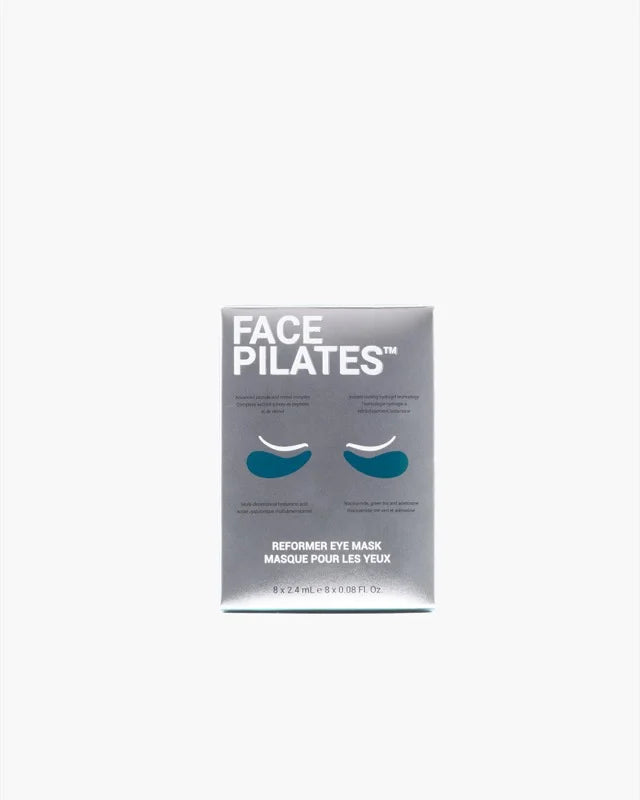
Not every cosmetic ingredient is compatible with the hydrogel format. Oil-soluble actives, fragrance compounds, and high-irritant peels generally are not. The water-soluble humectants and barrier-repair molecules that perform inside a hydrogel are, broadly, the following five: glycerin, which draws water into the stratum corneum; betaine, an osmolyte that supports cellular water balance and softens the appearance of fine lines; trehalose, a disaccharide that preserves the integrity of the lipid barrier under stress; sodium hyaluronate, the salt form of hyaluronic acid, which holds many times its weight in water and produces immediate plumping; and panthenol, also known as provitamin B5, which soothes inflammation and supports barrier repair. The Reformer Under Eye Mask by Face Pilates™ assembles these five actives within a single hydrogel patch shaped to the orbital contour, fragrance-free and alcohol-free, in keeping with the post-procedure standards recommended by dermatologists.
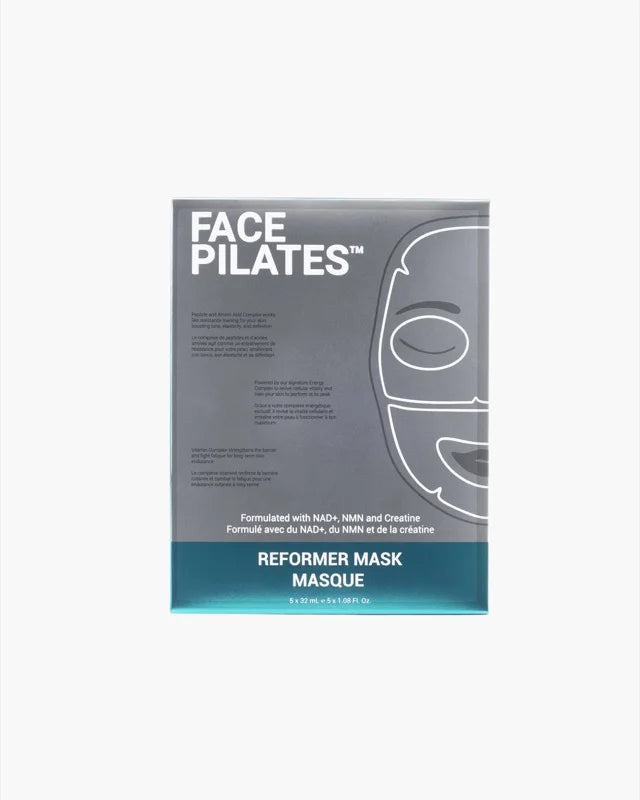
Within the Reformer collection, the full-face Reformer Mask is built on biocellulose, a nano-fibre lattice grown from fermented coconut water that adheres to the contours of the face. The Reformer Under Eye Mask, by contrast, is a hydrogel — chosen because the orbital area benefits more from cooling, slow-release, and contour-conforming wear than from a face-spanning fibre.
The Reformer Under Eye Mask in clinical context
The Reformer collection from Face Pilates™ was developed by Thomas Tullo, a Registered Massage Therapist in Ontario and the founder of the Face Pilates™ method practised at AMAN Spa Toronto. Worn for the final ten to fifteen minutes of an in-clinic Face Pilates™ treatment, the patch supports the lymphatic and vascular work performed during the session by sealing in actives at the moment circulation is highest. Worn at home, two to three times each week, or in the quiet days before a long flight, an evening event, or a photograph, it functions as a maintenance step that compounds across weeks. It is not a treatment for medical periorbital hyperpigmentation; readers seeking resolution of structural or genetic dark circles should consult a dermatologist for in-office options including pigment-targeted lasers, dermal fillers, or surgical correction.
How to use a hydrogel under-eye mask
Cleanse the skin gently and pat it dry. Remove the patches from their pouch with clean fingers, peel away the protective film, and apply the curved edge along the orbital bone, with the wider portion beneath the inner corner of the eye. Smooth the patch into place without dragging the skin. Leave it in position for fifteen to twenty minutes — long enough for the cool to settle, not long enough for the lattice to dry. Press any remaining serum into the surrounding skin with the ring finger rather than rubbing. Follow with sunscreen in the morning, or a barrier moisturiser in the evening. For results worth photographing, store the unopened patches in the refrigerator in the days leading up to an event.
What hydrogel cannot do — and why honesty matters
Hydrogel is a delivery system, not a cure for every under-eye complaint. Structural tear-trough depth, age-related fat-pad loss, and deep dermal melanin deposition do not resolve with topical treatment, and any product that promises otherwise should be treated with caution. Consistent sleep, adequate hydration, and disciplined ultraviolet protection do more for long-term anti-aging in the eye area than any topical alone. A hydrogel patch, used consistently, supports the visible appearance of refreshed, brighter, smoother eyes; it does not replace the structural reality beneath. We say this because it sets a realistic expectation for the reader and a clear professional ethos for the brand.
Hydrogel is a delivery system, not a magic ingredient. Used consistently, it can refresh tired eyes, soften the visible appearance of dark circles, and support the long, slow work of preventing fine lines. Used once before an event, it is a reliable depuffer. The Reformer Under Eye Mask by Face Pilates™ pairs the hydrogel format with a humectant and barrier ingredient stack designed by the clinician who created the Face Pilates™ method, so it is built to finish a treatment, not to substitute for one. Wherever you sit in your skincare ritual, understanding why hydrogel works will help you decide which under-eye products earn a place in your morning or your pre-event hour.
Considered questions
How is a hydrogel under-eye mask different from a sheet mask?
A traditional sheet mask is a cotton or fibre carrier saturated in serum; it dries within ten to fifteen minutes and offers limited contour adhesion. A hydrogel patch is a polymer lattice that holds water within its structure, conforms to the orbital bone, releases its actives gradually, and remains cool against the skin throughout wear.
How often should I use the Reformer Under Eye Mask?
Two to three times each week is a sustainable rhythm for most skin. The patch can also be used as an evening ritual the day before an event, a long flight, or a photograph. It is gentle enough to use after microcurrent, gua sha, LED, or a Face Pilates™ treatment.
Will a hydrogel mask remove my dark circles?
Hydrogel masks address the topical elements of dark circles — dehydration, vascular shadowing, and barrier disruption — and the appearance of the eye area is visibly refreshed after wear. Structural causes such as tear-trough depth or genetic pigment require in-office dermatological care.
Is the mask safe after laser, microneedling, or peels?
The formulation is fragrance-free and alcohol-free and contains only humectants and barrier-supportive actives, which is the profile dermatologists recommend after most aesthetic procedures. Follow your provider's specific aftercare protocol, and reintroduce active ingredients only when your clinician advises.
Should I keep the patches in the refrigerator?
It is not required, but the patches become more effective at reducing puffiness when chilled. In the days before an event, a brief stay in the refrigerator deepens the cool, restful sensation on application.
Where is the Reformer Under Eye Mask made and sold?
The Reformer collection is produced for Face Pilates™ and is available through face-pilates.com, shipped from Toronto across Canada and the United States.
MDPI Cosmetics — Hydrogels and HA-Based Hydrogels in Pharmaceutical Transdermal Delivery and Topical Cosmetics (2025).
PMC — Hydrogel-Based Active Substance Release Systems for Cosmetology and Dermatology Application: A Review (2020).
Pour Mohammad et al., Dermatologic Therapy — Systematic Review and Meta-Analysis of Treatments for Dark Eye Circles (2025).
MDPI Cosmetics — Periorbital Hyperpigmentation: Causes and Treatments (2021).
Boston Dermatology Advocate — What are under eye patches for, and do they work? According to dermatologists.
